Why does hair grow back uneven after laser? This question often appears when one underarm looks smooth, while scattered hairs return along the bikini line or lower legs. The pattern can feel alarming, but it usually reflects hair biology rather than treatment failure. Laser energy works best during the active growth phase. Each follicle follows its own schedule, so nearby hairs may shed at different times. Some treated hairs may also appear to return before they actually release from the follicle.
Board-certified dermatologist Dr. Michele S. Green explains, “Laser hair removal offers long-term hair reduction, not guaranteed permanent removal.” That distinction matters. Uneven regrowth may involve incomplete coverage, changing treatment settings, lighter hair, hormonal shifts, skin type, or inconsistent appointment timing. Coarse dark hairs often respond faster than fine, pale hairs. Facial areas can behave differently during hormonal changes. Even a small missed strip can become obvious under bright bathroom lighting.
Real treatment experiences are rarely perfectly symmetrical. A client may notice roughness on one calf, then shed more hair during the following week. A clinic may also need to adjust energy levels for comfort and safety. That can produce different results across body areas. Still, assumptions can mislead. Persistent patches deserve review by a qualified laser professional or dermatologist, especially when new facial hair, irregular periods, irritation, or sudden growth appears. This guide examines ten practical reasons why regrowth looks uneven, while acknowledging an uncomfortable truth: individual response cannot be predicted perfectly from a treatment chart.
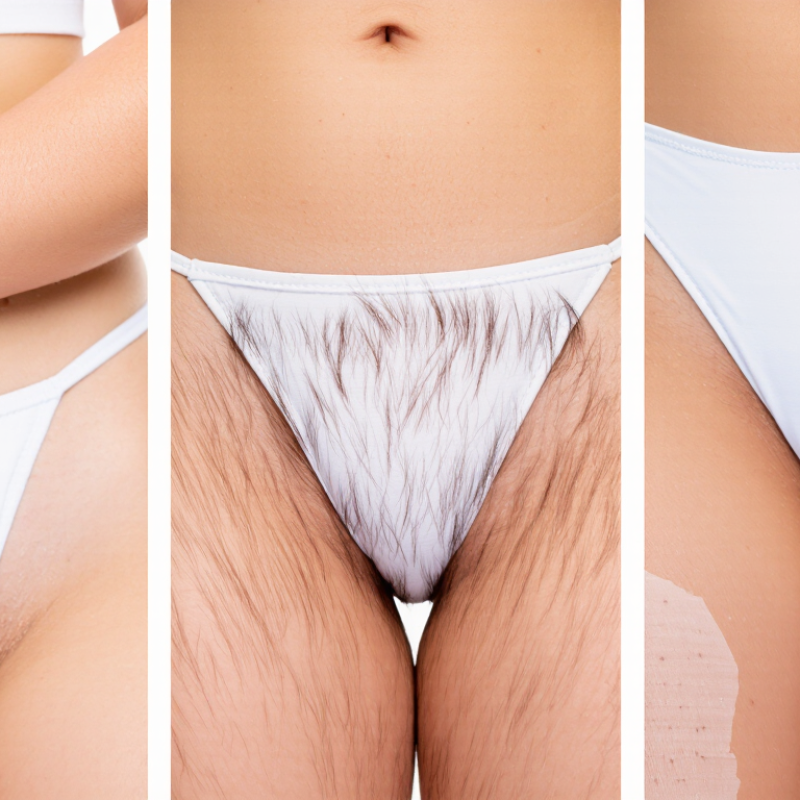
Laser Hair Reduction Basics: Why Hair Cycles Produce Uneven Regrowth
Hair often grows back unevenly after laser treatment because follicles do not share one schedule. Each hair moves through anagen, catagen, and telogen phases. Laser energy works best when the follicle is in anagen and contains visible pigment. Resting follicles may remain quiet during treatment, then produce hair weeks later. Some hairs shed quickly, while nearby hairs appear unchanged.
This creates small patches, scattered stubble, or different growth speeds. Hormonal changes can also influence facial, abdominal, and bikini-area hair. Hair colour, skin tone, treatment settings, and follicle depth may affect the response. Coarse hairs often react differently from fine, pale hairs. The skin may look smooth in one area and rough in another.
In practice, repeated sessions are planned around the hair cycle, not immediate smoothness. Shaving between appointments usually does not alter the follicle or make hair thicker. It is tempting to judge results after one session, but that can be misleading. I have also seen uneven regrowth mistaken for treatment failure. That assumption can be wrong. A qualified practitioner should review the timing, shedding pattern, medical history, and any signs of hormonal imbalance. Persistent sudden changes deserve professional assessment. Photographs taken under similar lighting can reveal gradual progress better than daily mirror checks. Waxing or plucking may remove the target below the skin, which can affect how the next session is assessed.
Growth Timing: Only About 20–30% of Hair May Be in Anagen
Hair can grow back unevenly after laser treatment because follicles do not share the same growth schedule. At any appointment, only about 20–30% of hair may be in the anagen phase, when the follicle is actively growing. Laser energy works most effectively during this stage. Other follicles may be resting or shedding and can respond later.
This creates visible patches. One area may look smooth, while nearby hairs return after several weeks. The regrowth may also appear thinner, lighter, or slower than before. Shaving can make the pattern look more obvious, especially when short stubble appears beside treated skin. It is easy to assume the treatment failed. That conclusion is often premature.
Hair cycles vary by body area, hormones, genetics, and skin characteristics. A qualified practitioner may adjust treatment timing after examining your response, rather than using a fixed schedule for everyone. In practice, repeated sessions are needed to reach follicles during different anagen windows. The 20–30% figure is an estimate, not a guarantee. Some people respond unevenly, and that deserves honest discussion. Track changes with photos taken under similar lighting, and report sudden shifts or unusual irritation to a licensed medical professional.
Why Hair Grows Back Unevenly After Laser Hair Removal
Laser hair removal is most effective when follicles are in the anagen, or active-growth, phase. At a given treatment time, only about 20–30% of hair may be in anagen, so different follicles can shed and regrow at different times.
Top 10 contributing factors:
- Different follicles are naturally in different growth phases.
- Only actively growing anagen hairs are most responsive to laser energy.
- Hair follicles can vary in depth, thickness, and pigmentation.
- Hair-cycle timing differs between body areas.
- Treatment intervals may not match each person’s growth cycle.
- Missed areas or uneven coverage can leave isolated regrowth.
- Shaving, waxing, or plucking before treatment can change visible regrowth timing.
- Hormonal fluctuations may stimulate new or faster hair growth.
- Hair colour, skin colour, and treatment settings affect follicle response.
- Some medications and medical conditions can influence hair growth patterns.
The chart shows the commonly cited estimated proportion of hair in anagen during a treatment window; actual proportions vary by body area and individual.
Ten Causes of Patchy Regrowth: Hormones, Settings, Skin, and Technique
Top 10 Reasons Why Hair Grows Back Uneven After Laser?
Patchy regrowth often reflects the hair growth cycle, not treatment failure. Each follicle enters an active phase at a different time. Laser works best when hair contains enough pigment and is actively growing. Some areas may respond quickly, while nearby follicles remain quiet. It can look uneven for several weeks.
Hormonal changes may stimulate new growth, especially around the chin, jaw, neck, or abdomen. Conditions affecting androgen levels can also reduce consistency. Treatment settings matter too. Energy that is too low may weaken hair without disabling the follicle. Energy that is too high may irritate the skin and force treatment delays. Skin tone, tanning, and sensitivity should guide professional adjustments.
Technique creates another common pattern. Missed passes, uneven pressure, poor contact, or inconsistent spacing can leave small islands of hair. Curved areas, such as ankles and knees, are easy to overlook. Shaving too closely may also make some regrowth harder to see. A simple explanation can be wrong.
Track dates, shedding, skin reactions, and hormonal changes with photographs. Avoid plucking between sessions, because the root is needed for effective targeting. A qualified practitioner should review the device settings, treatment map, skin response, and medical history before changing the plan. Some cases improve with timing adjustments; others need medical evaluation for hormonal causes.
Clinical Benchmark: FDA Defines Permanent Reduction as at Least 90%
Hair may grow back unevenly after laser treatment because follicles do not share the same growth cycle. Laser energy works best during the active growth phase. Some follicles remain dormant and appear later, creating scattered patches or darker areas. Treatment timing matters. Missed spots, inconsistent passes, unsuitable settings, and changing hair thickness can also affect the result.
The clinical benchmark needs careful interpretation. A 90% reduction is often cited when discussing permanent hair reduction, but it does not mean every treated area becomes hair-free forever. FDA language focuses on a long-term, stable reduction in regrowth, assessed over time. Results should be measured with consistent photographs, lighting, and treatment intervals. A small amount of regrowth can still be normal.
Hormonal changes may stimulate new growth, especially on the face, neck, or abdomen. Skin tone, hair color, medication history, and device settings also influence response. Dark, coarse hair usually absorbs laser energy more effectively than fine or pale hair. It is easy to blame the equipment. That may be wrong. Inadequate cooling, poor contact, or rushed coverage can matter just as much.
A qualified practitioner should review progress after several sessions, not judge success from one uneven week. New growth should be assessed before changing treatment intensity. Safety comes first. Skin irritation, pigment changes, or persistent pain require professional evaluation.
Treatment Planning: Why Six or More Sessions and Maintenance May Be Needed
Top 10 Reasons Why Hair Grows Back Uneven After Laser?
Uneven regrowth often reflects the hair growth cycle, not treatment failure. Laser works best when hairs are in the active growth phase. However, follicles do not enter this phase together. Some hairs may respond during one appointment, while nearby follicles remain dormant. Visible patches can therefore appear between sessions.
A carefully planned course often requires six or more sessions. Appointments are usually spaced several weeks apart, allowing new growth to become treatable. The exact schedule depends on hair thickness, skin type, body area, hormonal changes, and treatment response. A qualified clinician should review progress and adjust settings safely. More energy is not always better. It may increase irritation without improving results.
Maintenance treatments may still be needed after the initial course. Hormonal shifts, ageing, medication changes, or previously inactive follicles can encourage new growth. This part is easy to underestimate. Treatment plans are not perfectly predictable. A clinician may recommend occasional visits when fine hairs return, rather than repeating the original schedule. Take clear photographs between appointments. They can reveal gradual thinning that a bathroom mirror may miss. Missing sessions, shaving inconsistently, or expecting permanent removal after one visit can also distort expectations. Lower density is often a more realistic goal than perfectly bare skin.
Conclusion
Uneven hair regrowth after laser treatment is common and usually reflects the natural hair-growth cycle rather than treatment failure. The question “why does hair grow back uneven after laser” can be explained by the fact that laser energy works best on hairs in the active anagen phase, while only about 20–30% of hairs may be in that stage during one session. As different follicles enter the active phase at different times, some areas may respond sooner than others.
Patchy regrowth can also result from hormonal changes, variations in hair thickness or skin type, inconsistent treatment timing, unsuitable settings, incomplete coverage, or incorrect technique. Temporary shedding and delayed follicle response may make results appear uneven as well. Multiple sessions—often six or more—are commonly needed, followed by maintenance treatments when necessary. Clinical expectations should remain realistic: permanent hair reduction generally means a substantial long-term decrease, with the FDA benchmark commonly described as at least 90% reduction, not total removal of every hair.

 Vutii Beauty