7 Best Ways to Choose the Right Laser Treatment Type?

Time:2026-09-23 Author:Mason
0%

Choosing a laser treatment should begin with the problem, not the machine. Acne scars, pigmentation, unwanted hair, redness, and wrinkles require different wavelengths and treatment depths. This is why understanding how to choose the right laser treatment type matters before comparing prices or dramatic before-and-after photos.

Demand is growing. The International Society of Aesthetic Plastic Surgery’s 2023 Global Survey recorded more than 19 million nonsurgical procedures worldwide, an increase of 6.8% from the previous year. The American Society of Plastic Surgeons also reported more than three million skin-resurfacing procedures in the United States in 2023. These figures show strong interest, but popularity does not prove suitability. A busy clinic may still recommend the wrong device for a particular skin condition.

A reliable decision considers skin tone, diagnosis, treatment area, expected results, recovery time, and medical history. Ask whether the device is appropriately authorized in your country, who will operate it, and how complications are managed. A qualified dermatologist should examine your skin in person, especially when pigmentation or scarring is involved. Darker skin may face a higher risk of post-inflammatory hyperpigmentation with certain settings. That risk deserves clear discussion.

The seven methods in this guide turn those questions into practical checks. They include evaluating the treatment goal, laser category, provider credentials, safety evidence, downtime, cost, and aftercare. The framework is useful, not infallible. Individual healing varies. Even experienced clinicians can revise a plan after examining your skin closely. Good decisions leave room for that uncertainty.
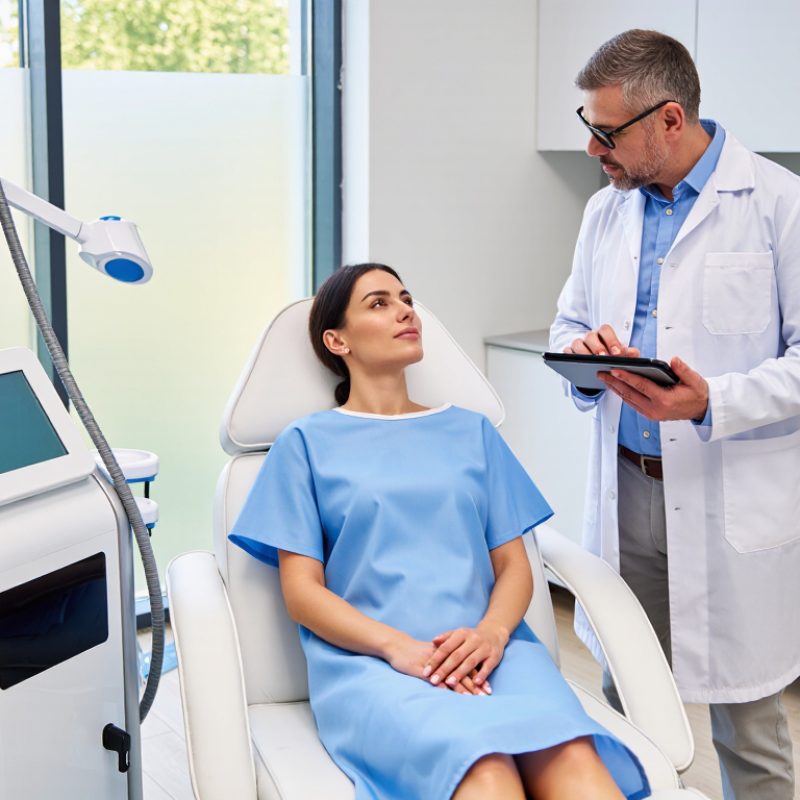
7 Best Ways to Choose the Right Laser Treatment Type?

Understand Your Skin Concern and Treatment Goal

Choosing a laser treatment starts with your skin concern, not the machine’s name.

Acne affects up to 50 million Americans annually, according to the American Academy of Dermatology. Yet acne scars, redness, pigmentation, and fine lines need different approaches. A laser that improves texture may worsen discoloration in sensitive or deeper-toned skin.

Define your treatment goal clearly. Do you want smoother cheeks, lighter sunspots, reduced redness, or gradual collagen improvement?

Take photographs in natural light, note your skincare products, and describe your downtime limits. The 2023 ISAPS Global Survey recorded 19.1 million non-surgical aesthetic procedures worldwide.

Popularity, however, does not prove suitability. A treatment can be popular and still be wrong for you.

Ask a qualified dermatology professional about wavelength, energy level, recovery, and possible pigment changes. Discuss recent tanning, active infections, medications, and any history of poor healing.

For darker skin tones, conservative settings and test areas may reduce unnecessary risk. Results also depend on sunscreen use and realistic expectations. One session may not be enough.

The first plan is not always the best plan. Reassess your skin after healing, because redness can temporarily resemble a treatment failure.

Reliable providers explain limitations, document consent, and recommend delaying treatment when your skin barrier is damaged.

Compare Laser Types by Wavelength, Target, and Treatment Depth

Choosing a laser starts with the target, not the device name. Wavelength determines which tissue absorbs energy.

Melanin absorbs shorter wavelengths, such as 755 nanometers, making them useful for some pigment and hair concerns. Longer wavelengths, including 1064 nanometers, generally reach deeper tissue with less surface absorption. Water-absorbing wavelengths, such as 2,940 nanometers, work closer to the surface and can support controlled resurfacing.

Treatment depth matters as much as wavelength. A surface concern may need limited ablation, while deeper scars or vessels require energy that reaches lower layers. The American Society for Dermatologic Surgery’s 2023 consumer survey reported that 70% of respondents were considering a cosmetic procedure. That demand does not make every treatment suitable. Skin tone, tanning history, medication use, and previous reactions can change the risk profile. A consultation should include test-spot planning, cooling methods, and realistic downtime.

Tips:

Ask which chromophore the laser targets. Request the wavelength and intended depth in writing. Confirm who performs the procedure and how complications are managed. Evidence is useful, but it is not magic. A 2023 review in Lasers in Medical Science found that outcomes vary with settings, skin type, and operator experience. I would not choose a treatment from wavelength alone. The target, depth, and clinical judgment must agree.

Evaluate Skin Tone, Sensitivity, and Potential Treatment Risks

Choosing a laser treatment starts with your skin, not the device name. A clinician should assess your natural tone, tanning history, sensitivity, and treatment goal. Darker skin may carry a higher risk of post-inflammatory hyperpigmentation with some heat-based settings. Lighter skin can still develop burns, prolonged redness, or uneven texture. Color alone is not enough.

Ask how the wavelength targets pigment, blood vessels, hair, or resurfacing layers. A qualified practitioner should explain benefits, downtime, and realistic alternatives in plain language. Mention eczema, active acne, cold sores, scarring tendencies, and every medication or supplement. Photosensitizing medicines deserve careful review. A patch test on a less visible area may reveal an unexpected reaction before full treatment.

Sensitivity matters during and after treatment. Strong stinging, whitening, blistering, or worsening pain should not be dismissed as “normal.” Use medical eye protection, follow cooling instructions, and avoid tanning before and after treatment. I would question promises of permanent results or zero risk. Even well-planned treatment can need adjustment. Skin changes, healing speed, and outcomes vary. That uncertainty is not a weakness; it encourages careful assessment over a rushed appointment.

Review Downtime, Results, Costs, and Required Treatment Sessions

Choosing the right laser treatment requires more than comparing advertised results. Start by identifying your goal, such as reducing pigmentation, softening acne scars, or improving fine lines. Ablative treatments may create stronger changes, but they often involve longer downtime and stricter aftercare. Non-ablative options usually require less recovery, though results may appear gradually.

Ask how many sessions are realistic. Some concerns improve after one treatment, while others need three to six appointments spaced several weeks apart. Costs depend on treatment intensity, clinic location, skin area, and the practitioner’s experience. Request a complete estimate, including consultation and follow-up care. A professional assessment should also consider your skin tone, medical history, sun exposure, and current skincare products. No choice is perfect.

Tips: Ask for dated before-and-after images from similar skin types. Confirm the expected redness, swelling, peeling, and return-to-work time. Keep a small recovery margin; your skin may heal slower than the brochure suggests. Also ask what happens if results are uneven or additional sessions become necessary. A qualified practitioner should explain benefits, limitations, risks, and alternatives without pressure. Reflect honestly on your schedule and budget. The strongest treatment is not always the most suitable one.

Choose a Qualified Provider and Prepare for Personalized Care

7 Best Ways to Choose the Right Laser Treatment Type?

Choosing a qualified provider is the safest starting point for laser treatment. Look for appropriate medical training, relevant experience, and clear safety procedures. A trustworthy provider should examine your skin, discuss your goals, and review your medical history. They should explain possible risks, including irritation, pigmentation changes, and scarring. Be cautious when someone promises perfect results. Real treatment outcomes vary.

Personalized care should feel specific, not rushed. During consultation, ask which laser type suits your skin tone, concern, and recovery preferences. The provider should explain settings, treatment intervals, discomfort levels, and aftercare. Ask to see realistic before-and-after examples from similar cases. A patch test may be useful for sensitive skin. It cannot remove every risk, but it may reveal an unexpected reaction.

Tips: Prepare a list of medications, skincare products, and previous procedures. Avoid hiding recent tanning or skin irritation. Ask who will perform the treatment and how emergencies are handled. Take time to think. A second consultation can expose missing details. I once underestimated how important aftercare was; even a well-planned treatment can disappoint when instructions are ignored. Good care includes follow-up, honest answers, and adjustments when your skin responds differently than expected.

7 Best Ways to Choose the Right Laser Treatment Type? - Choose a Qualified Provider and Prepare for Personalized Care

A practical comparison guide for evaluating laser procedures, provider qualifications, treatment goals, and personal safety factors

Best Way to Choose What to Compare Useful Questions to Ask Typical Preparation Recovery Considerations Important Safety Check
1Define the treatment goal Match the procedure to the concern, such as unwanted hair, vascular redness, pigment irregularities, acne scars, wrinkles, or tattoo ink. “What result is realistic for my specific concern?”
“Is laser treatment appropriate, or would another option be safer?”
Bring a list of medical conditions, allergies, medicines, previous procedures, and products used on the treatment area. Results may require multiple sessions because hair growth, pigment, vascular changes, and collagen remodeling respond at different rates. Be cautious of providers who promise permanent results, identical outcomes for everyone, or a single treatment for every concern.
2Understand the laser category Determine whether the procedure is ablative, non-ablative, or primarily designed for hair, pigment, blood vessels, or tattoo ink. “Does the treatment remove the outer skin surface?”
“What tissue target does the energy affect?”
Follow the provider’s instructions about sun exposure, skin products, shaving, and medication disclosure. Ablative resurfacing generally causes more visible healing than non-ablative treatment. Redness, swelling, tenderness, or temporary pigment changes can occur. Ask for the expected downtime in days and the specific signs that require medical attention.
3Check provider qualifications Review the clinician’s license, relevant training, experience with the selected procedure, and experience treating your skin type. “Who will perform each step?”
“How often do you perform this treatment?”
“Can I see representative, consented results?”
Confirm that the consultation is performed by a qualified medical professional rather than relying only on a sales consultation. Qualified supervision is especially important if complications such as burns, infection, scarring, or pigment alteration develop. Verify licensing through the appropriate professional or government registry where available, and ask who provides emergency follow-up.
4Evaluate skin type and pigmentation risk Consider natural skin tone, tanning, history of dark marks, melasma, keloid formation, and previous reactions to light-based treatments. “How will my skin tone change the settings or treatment plan?”
“What is my risk of temporary or lasting pigment change?”
Avoid intentional tanning and disclose recent sun exposure. A provider may postpone treatment if the skin is recently tanned or irritated. Post-inflammatory hyperpigmentation or hypopigmentation may occur, particularly after excessive energy exposure or in higher-risk skin. Patch testing or a conservative test area may be appropriate for some patients, although it does not eliminate all risk.
5Review medical and medication factors Assess active skin infections, open wounds, photosensitivity, pregnancy-related considerations, immune conditions, and medicines that affect healing or light sensitivity. “Could any of my medicines or supplements increase sensitivity or bleeding?”
“Should any product be stopped, and who should approve that change?”
Provide a complete medication and supplement list. Do not stop prescribed medicine without advice from the prescribing clinician. Healing can vary when the skin barrier, immune response, or sun sensitivity is affected by a medical condition or medication. Postpone treatment over active infection, unexplained lesions, or significant irritation until a qualified clinician evaluates the area.
6Compare the full treatment plan Compare the number of sessions, interval between sessions, anesthesia options, aftercare, total cost, maintenance needs, and follow-up arrangements. “What is included in the quoted price?”
“What happens if my response is limited or a complication occurs?”
Plan for sun protection, gentle cleansing, and the recommended recovery period. Arrange time away from activities if visible healing is expected. Do not compare procedures by price alone; a lower initial price may exclude consultation, aftercare, maintenance, or correction of complications. Receive written instructions covering wound care, pain control, sun protection, exercise restrictions, and follow-up timing.
7Prioritize informed consent and aftercare Choose a provider who explains benefits, limitations, alternatives, common side effects, uncommon complications, and expected results without pressure. “What are the alternatives?”
“Which symptoms are normal, and which require urgent review?”
Use only the products approved by the provider. Arrange reliable sun protection, including broad-spectrum sunscreen and physical protection when advised. Follow aftercare exactly. Seek medical advice for worsening pain, spreading redness, pus, fever, blistering, or delayed healing. Do not pick scabs or blisters, apply unapproved active products, or resume tanning while the treated skin is healing.

Important: Laser treatment settings, session numbers, healing time, and risks vary according to the procedure, treatment area, skin characteristics, medical history, and provider assessment. A personalized consultation is necessary before treatment.

FAQS

How should my skin be assessed before laser treatment?

A clinician should review your natural tone, tanning history, sensitivity, and treatment goal. Color alone is not enough.

Can darker skin have higher treatment risks?

Some heat-based settings may increase post-inflammatory hyperpigmentation risk. Careful settings and a patch test may help.

What medical details should I disclose?

Mention eczema, active acne, cold sores, scarring tendencies, medications, supplements, and recent tanning. Do not hide irritation.

What reactions are not normal during treatment?

Strong stinging, whitening, blistering, or worsening pain deserve immediate attention. Do not dismiss them casually.

How many sessions might I need?

Some concerns improve after one session. Others may require three to six appointments, spaced several weeks apart.

What downtime should I expect?

Redness, swelling, peeling, and slower healing are possible. Keep extra recovery time beyond the brochure’s estimate.

How can I choose a qualified provider?

Look for medical training, relevant experience, clear safety procedures, and honest explanations. Ask who performs the treatment.

What should I ask about costs and results?

Request a complete estimate, including consultation and follow-up care. Ask about uneven results and possible additional sessions.

Is the strongest treatment always the best choice?

No. Stronger treatments may create larger changes but often require longer downtime and stricter aftercare.

How should I prepare for personalized care?

Bring a medication list and skincare details. Ask about settings, discomfort, intervals, eye protection, cooling, and aftercare. Take time.

Conclusion

Choosing the right laser treatment begins with clearly identifying your skin concern and desired outcome, whether you want to address pigmentation, acne scars, wrinkles, redness, unwanted hair, or uneven texture. To understand how to choose the right laser treatment type, compare each option by its wavelength, target area, and treatment depth. Consider whether the laser is designed for surface-level renewal or deeper skin remodeling, and evaluate how your skin tone, sensitivity, medical history, and risk of side effects may affect your suitability.

You should also review practical factors, including expected downtime, likely results, treatment costs, and the number of sessions required. A qualified and experienced provider can assess your skin in person, explain realistic benefits and limitations, and create a personalized treatment plan. Proper preparation and aftercare guidance are equally important for supporting healing and achieving safer, more consistent results.

Mason

Mason

Mason is a seasoned marketing professional with a deep expertise in the company's offerings and a passion for driving brand awareness. With a strong background in digital marketing strategies, he has an innate ability to connect with diverse audiences and effectively communicate product benefits.......